50,000 Cans of Craftsmanship: Houston’s Iconic Beer Can House
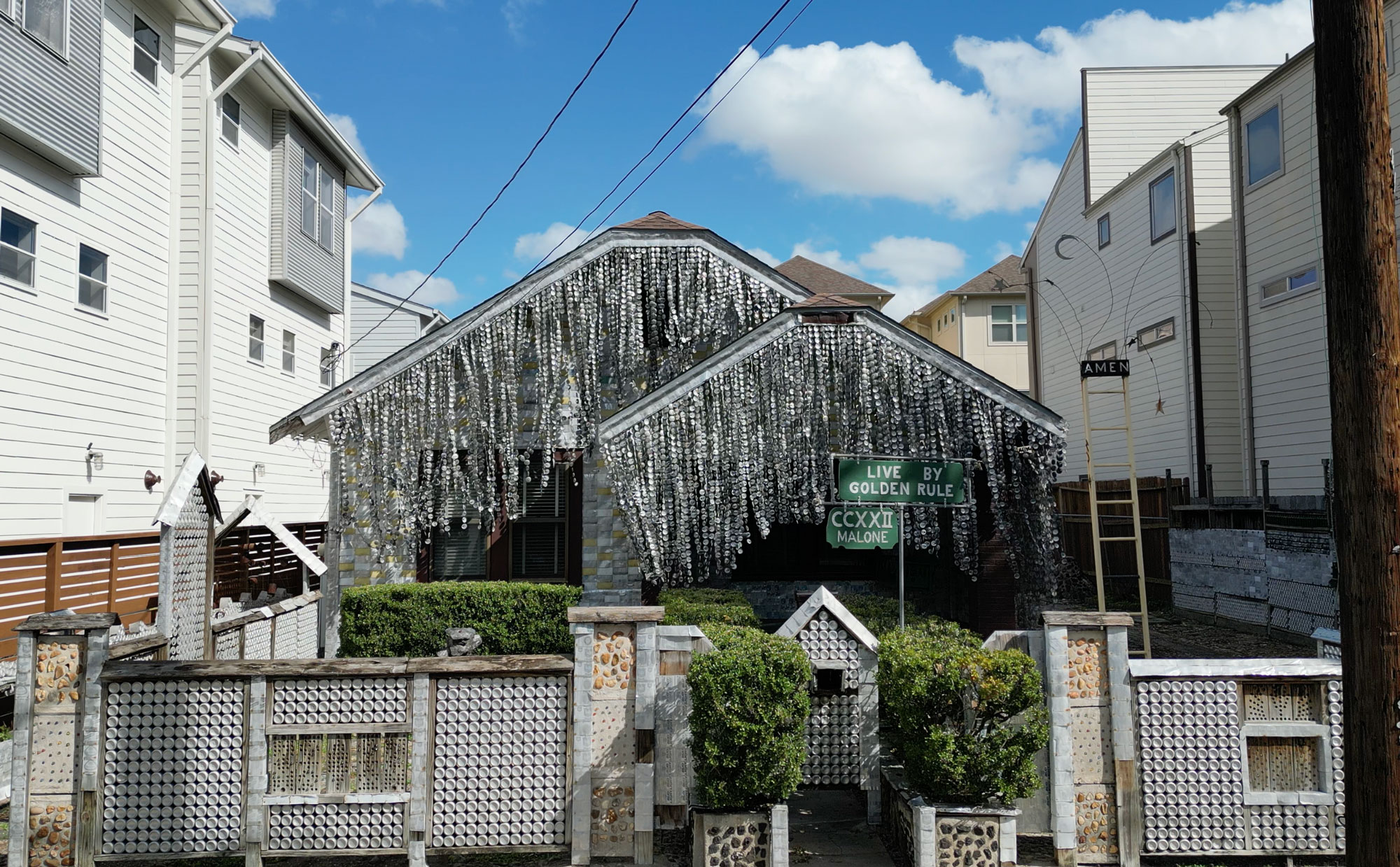
A shimmering testament to patience, persistence, and a lot of empty cans.
The Backstory
In 1968, John Milkovisch, a retired upholsterer for the Southern Pacific Railroad, decided he was tired of mowing the grass. He began by inlaying thousands of marbles, rocks, and metal pieces into concrete to create unique patio designs. But the project didn't stop at the yard. Over the next 18 years, John completely covered his home with flattened beer cans, pull tabs, and bottle caps.
When asked why he did it, John famously gave the most "Texas" answer possible: he just thought it was a good idea, and it was cheaper than painting. Today, the house is preserved by the Orange Show Center for Visionary Art and stands as a globally recognized symbol of outsider art and the ultimate DIY spirit.
📍 At a Glance
- Location: 222 Malone St, Houston, TX 77007
- Region: Gulf Coast / South Texas
- Typical Timeframe: 45 minutes to 1 hour
- Vibe: Whimsical, metallic, and truly unique.
More Than Just Siding
If you look closely at the "siding" of the house, you'll see it’s made of thousands of aluminum cans that John flattened by hand. He didn't just stop at the walls; he created garlands made of pull tabs that hang from the eaves. These garlands don't just look cool—they act as wind chimes, creating a gentle metallic tinkling sound whenever a Houston breeze blows through the neighborhood.
John reportedly drank a fair share of the "building materials" himself, but he also had plenty of help from family, friends, and neighbors who would drop off their empties. The house features brands that have long since disappeared from shelves, making it a time capsule of American brewing history. It’s surprisingly functional, too; John claimed the aluminum layers helped lower his cooling bills by reflecting the Texas sun.
Our Pro-Tip
The house is located in a quiet residential neighborhood with limited street parking, so be mindful of the neighbors when you visit. While you can view the exterior from the sidewalk anytime, we highly recommend paying the small admission fee to go inside the fence and visit the small museum in the back. You’ll get to see the workshop where John did his "can-flattening" and learn more about the man who turned a hobby into a masterpiece. Also, try to go on a sunny day—the way the light bounces off the thousands of aluminum surfaces is genuinely dazzling.
Note: The interior and grounds are typically open to the public on weekends. Check the Orange Show’s website for the most current tour hours.


Comments
Post a Comment